
Describe it once
Instead of repeating the same details to multiple companies, you share what happened and what you're seeing one time, and we connect you with a contractor who handles this type of water damage.
Serving Naperville, Illinois & surrounding areas
Calls answered around the clock
Water damage · Naperville, Illinois
Describe what happened once and we'll connect you with a local contractor who handles cleanup, drying, and restoration for water-damaged homes.
CALL NOW: +1 331 281 1144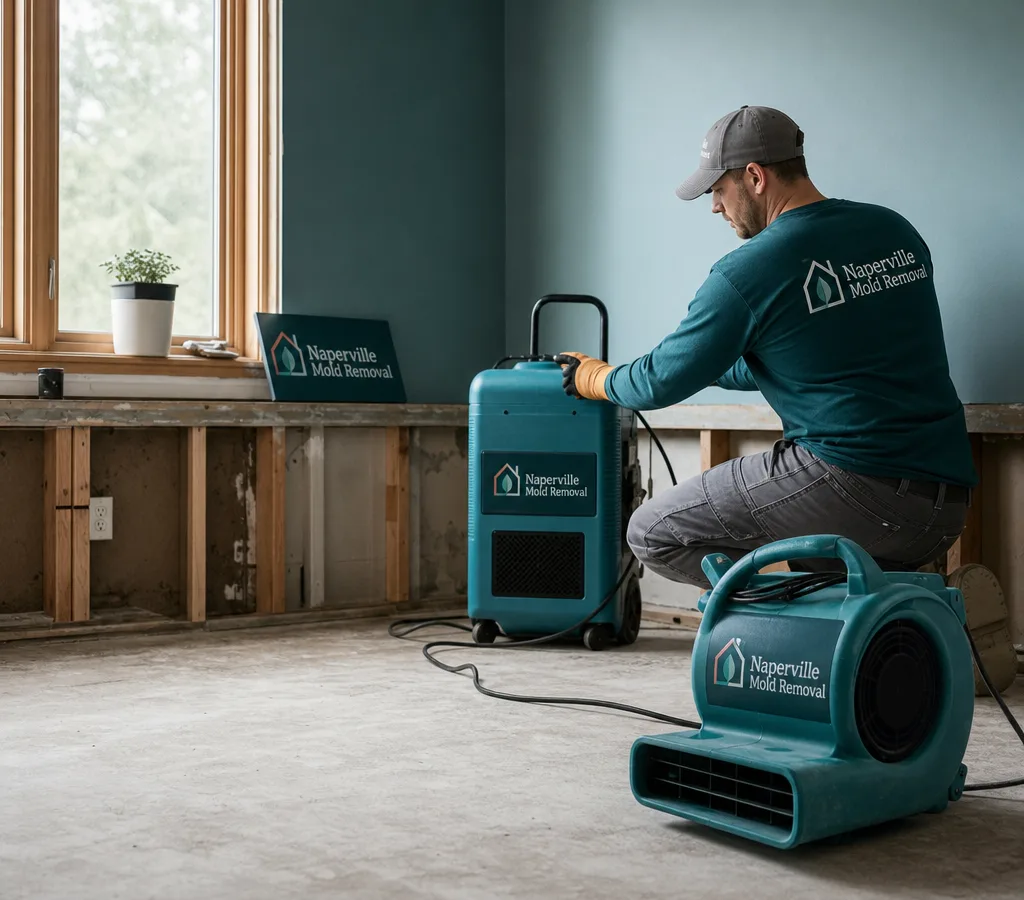
One call starts the connection
Water damage is more than wet carpet. Water can move under flooring, behind baseboards, into drywall, and down into lower levels. Water damage restoration in Naperville IL is the process of finding where moisture traveled, removing damaged materials when needed, drying what can be saved, and addressing odor and mold risk.
When you call Naperville Mold Removal, you explain what happened—a supply line leak, a water heater failure, a sump pump issue, or stormwater that got in. We then connect you with a local contractor who focuses on water damage restoration in Naperville and can walk you through what the next steps look like for your home.
A typical restoration plan may include:
Naperville homes often have finished basements and lower-level living space, which makes it especially important to check below the main leak area. Water that starts on a main floor can show up later as buckled laminate, stained ceiling drywall below, or swelling at baseboards.
A simpler route to help
Instead of repeating the same details to multiple companies, you share what happened and what you're seeing one time, and we connect you with a contractor who handles this type of water damage.
A small supply-line leak cleanup and a basement water event are different jobs. The goal is to connect you with a local pro set up for your situation, materials, and layout.
The contractors we connect you with serve Naperville and nearby suburbs, which matters when access, parking, and getting equipment in and out of the home are part of the job.
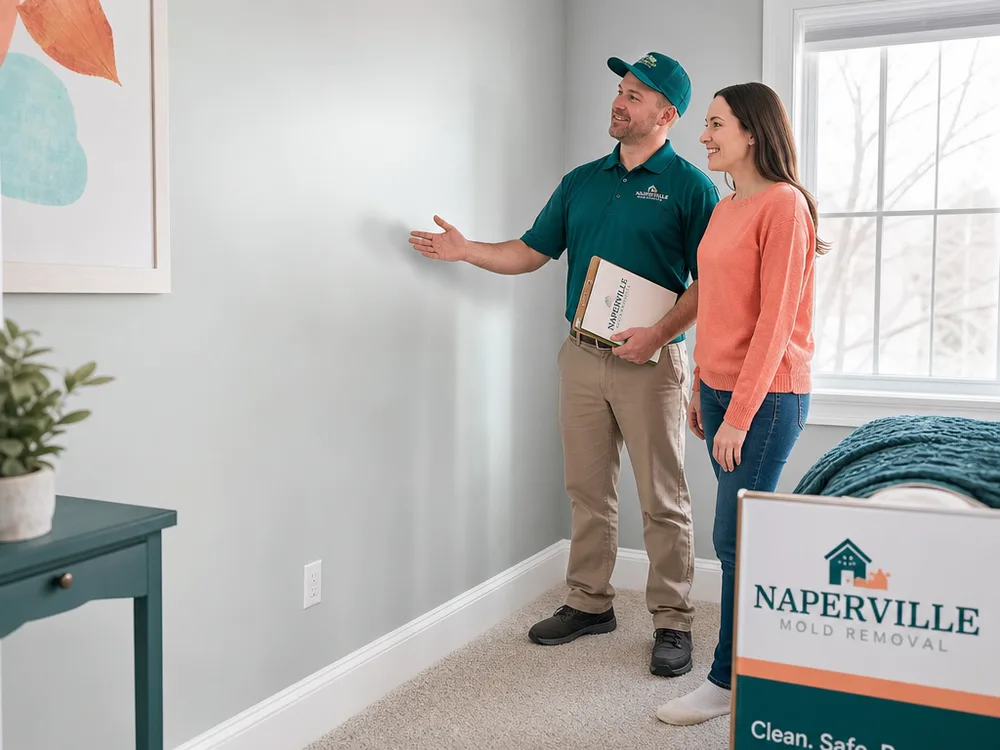
You speak with the contractor directly, ask your questions, and decide whether to move forward based on their plan for drying, cleaning, and repairs.
If you can safely do so, you can shut off the water, move valuables away from wet areas, and avoid running HVAC through wet spaces until a contractor evaluates the extent.
The restoration process
The first priority is stopping the water—at a shutoff valve, appliance line, roof intrusion, or seepage point—and identifying the water category. The contractor will ask what happened, when it started, and whether any sewage or drain backup is involved.
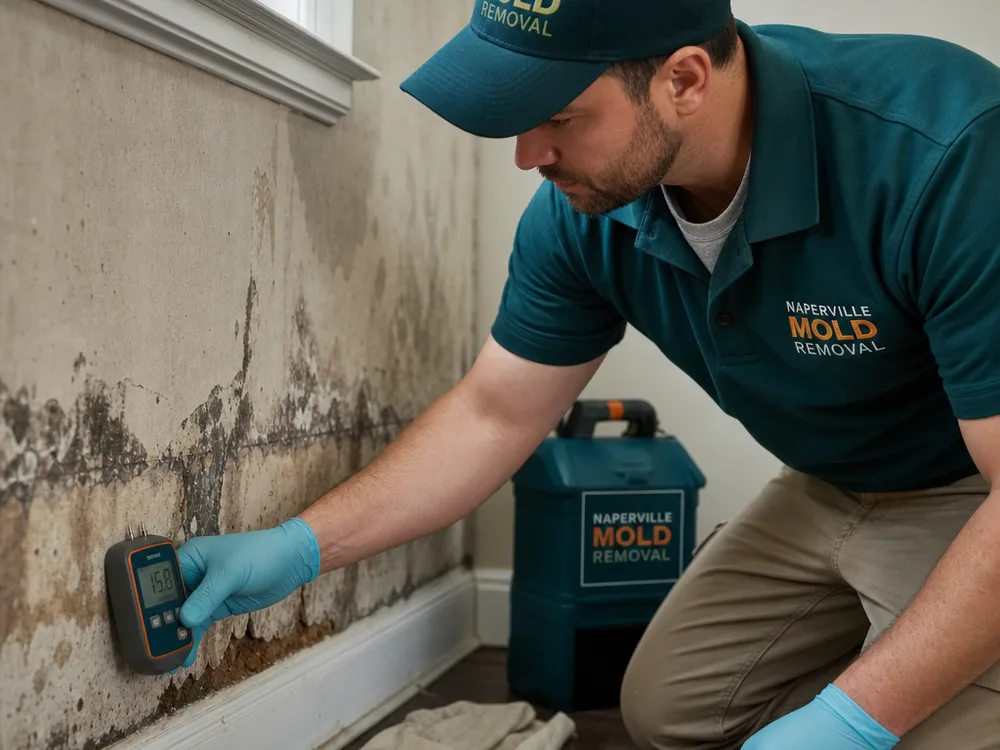
Expect a room-by-room check around the affected area, including adjacent walls and ceilings and, if applicable, the level below. Readings help determine what can dry in place versus what needs to be opened up.
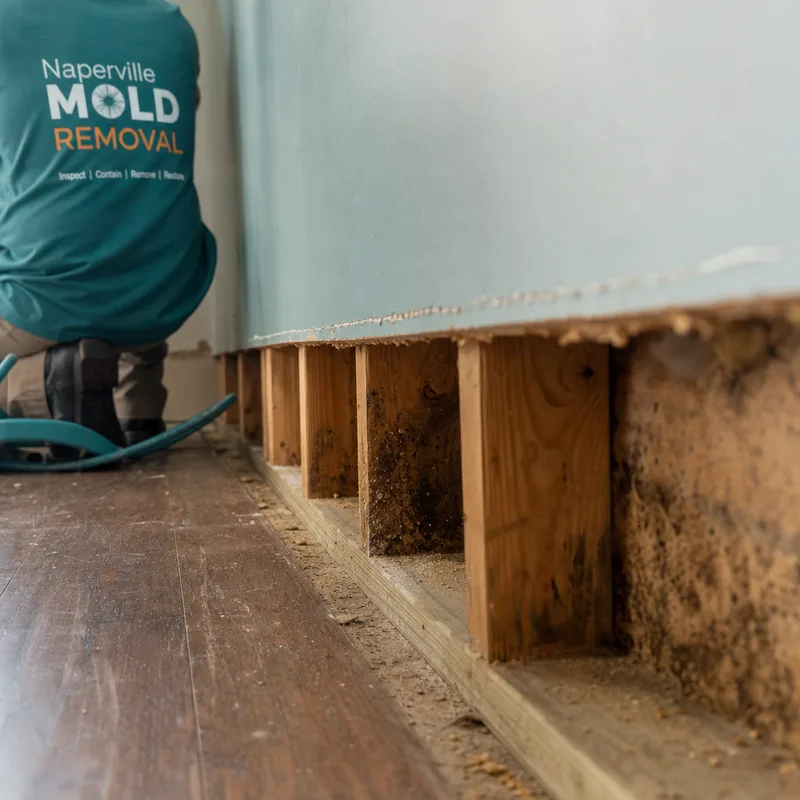
Standing water is removed. Wet carpet pad, swollen baseboards, saturated insulation, and crumbling drywall are common candidates for removal so the structure can dry fully.
Drying equipment is placed and left running while conditions are monitored. Containment and air filtration may be used to keep dust and moisture-laden air from moving through the home.
After drying goals are met, the contractor may clean and deodorize affected spaces and then coordinate or perform rebuild work such as drywall, paint, trim, and flooring.
If you're dealing with water damage, a clear description of the source, the rooms affected, and the materials involved is usually enough to get you connected with a local contractor who can take it from there.
CALL NOW: +1 331 281 1144Inside the work area
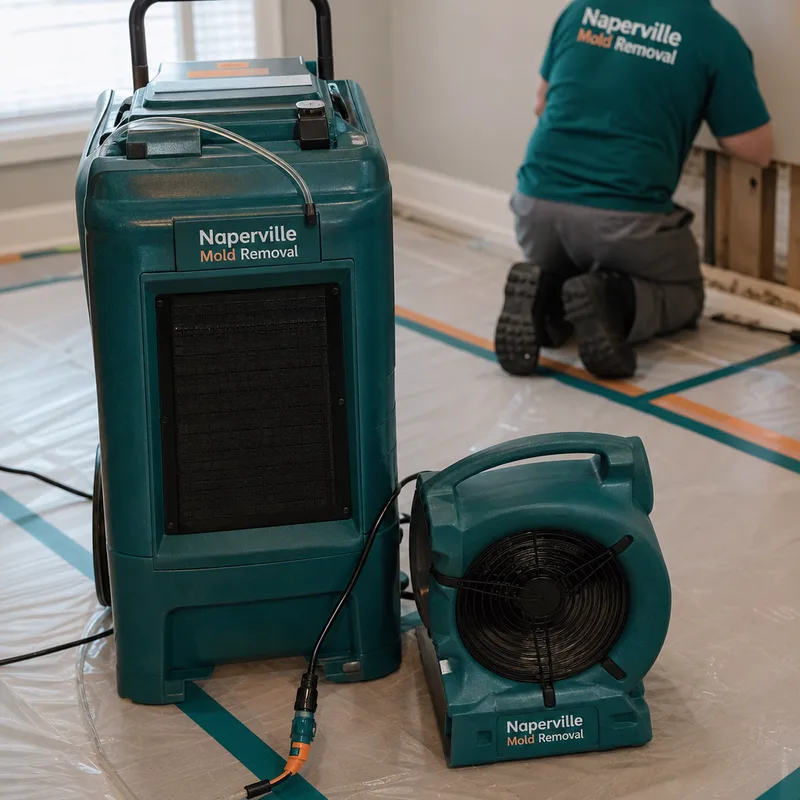
Questions before you call
The most useful details are the source, if known, when you noticed it, which rooms or levels are affected, and what materials got wet, such as carpet, hardwood, drywall, or cabinetry. If the water came from a drain backup or involved sewage, say that up front so the contractor can plan for containment and sanitation.
They base it on saturation level, how long materials stayed wet, and whether water is contaminated. Dense materials like framing and some subfloors can often be dried with the right setup, while insulation, swollen MDF trim, and delaminated flooring layers may be candidates for removal.
Yes. Water can wick under baseboards and floating floors, and it can move along joist bays or plumbing penetrations. That's why water damage restoration in Naperville typically starts with moisture mapping in adjacent areas and, when applicable, checking the level below the leak.
If mold is present or suspected, the contractor may recommend containment, HEPA filtration, and removal of affected porous materials. Some homeowners also want a separate plan for mold-specific work; mold remediation is the next step contractors often discuss after drying and source control.
If it's safe and electricity is not at risk, basic air movement can help, but it can also spread moist air or odors through the home if HVAC runs through wet areas. A contractor can advise whether to isolate the area, what to remove from the floor, and whether to avoid running the system until the extent of wet materials is confirmed.
Some contractors focus on mitigation—drying, cleaning, and removing damaged materials—and then coordinate repairs, while others can handle rebuild work as part of the same scope. When we connect you with a contractor, ask how they approach drying verification, what repair work they take on, and how they document the process.
You call, describe what happened and what you're seeing, and we connect you with a local contractor who handles water damage restoration. You then speak with that contractor directly for recommendations, scheduling, and any quote for the work.
One call starts the connection
Describe the leak or flooding once, tell us what rooms are affected, and we'll connect you with a local contractor who handles water damage restoration in Naperville.