
One description of the problem
Explain the leak history, odor, or visible growth once, and we connect you with a local contractor who does this kind of testing.
Serving Naperville, Illinois & surrounding areas
Calls answered around the clock
Mold testing · Naperville, Illinois
Describe what you're noticing once and we'll connect you with a local contractor who handles mold sampling and written findings for homeowners.
CALL NOW: +1 331 281 1144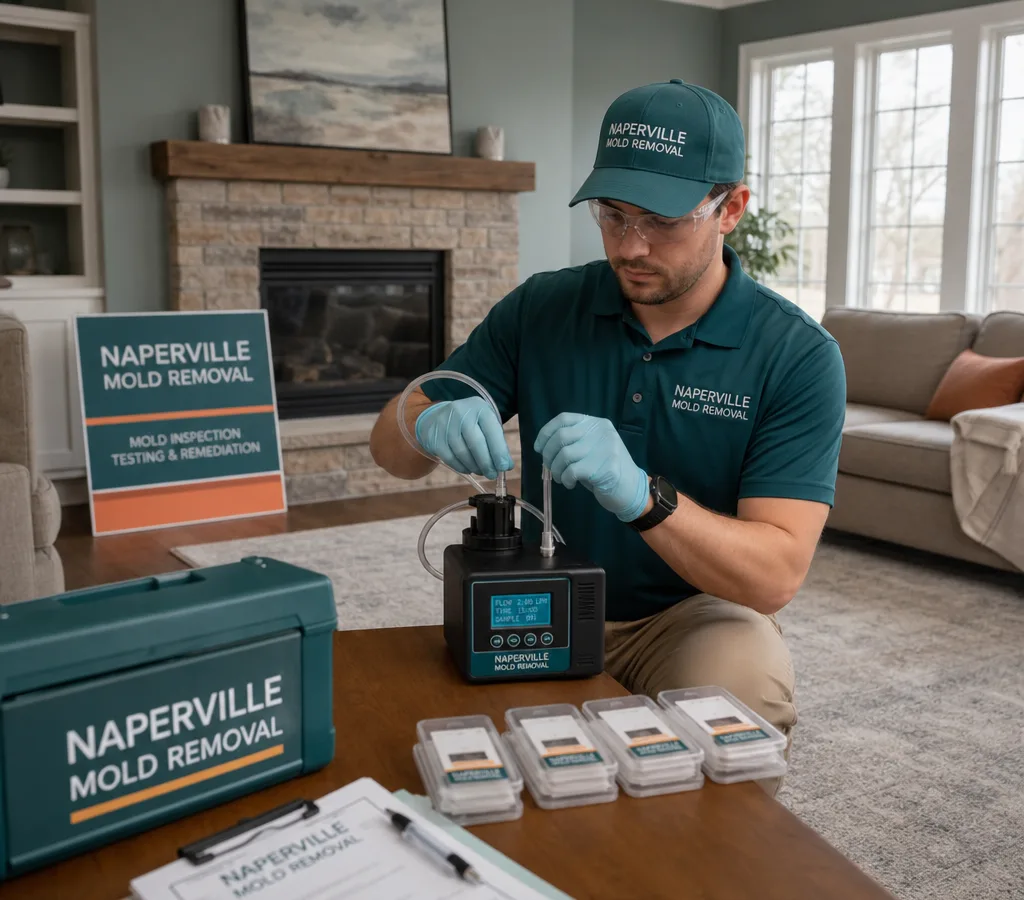
Sampling and documented findings
When you search for mold testing Naperville, you usually want clarity: Is there a mold problem, where is it likely coming from, and what should happen next? Testing is about collecting samples and observations in a way that can be documented and compared, so cleanup planning is based on evidence instead of guesswork.
A local contractor typically starts by listening to what you've noticed—musty odor, staining, a past water leak, recent flooding, or ongoing humidity. The contractor then looks for moisture conditions and likely sources such as:
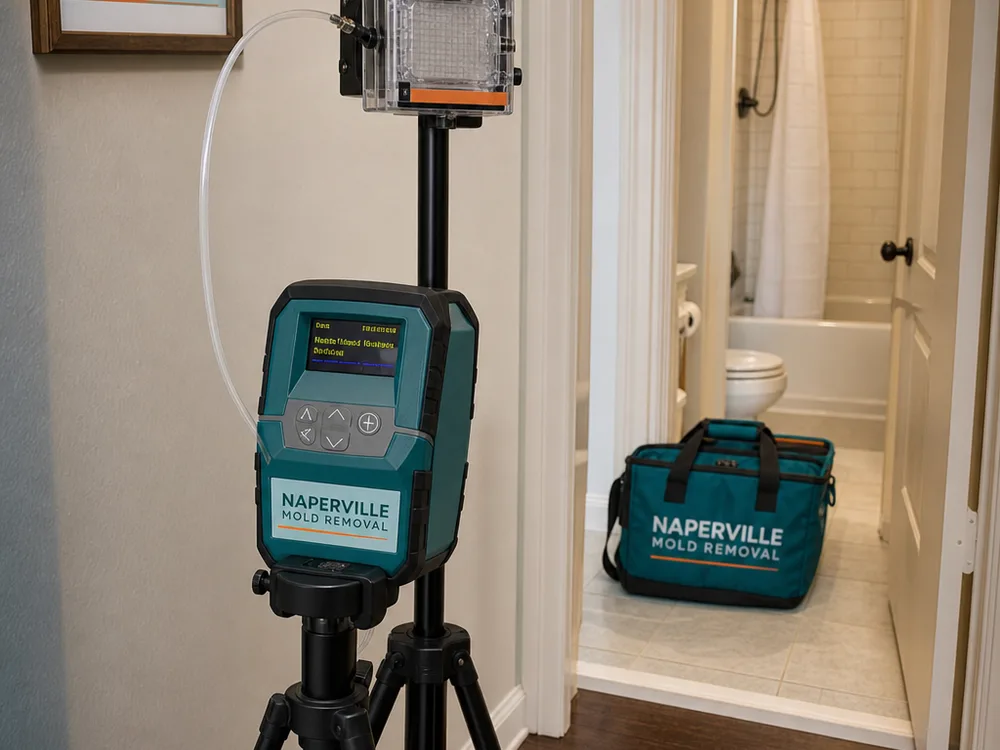
Sampling methods vary with the situation, but the goal is the same: understand what's in the air and on surfaces where concerns exist, and compare it to a reference point.
Common parts of a mold testing appointment include:
What you receive is typically a written summary of observations and lab results when lab analysis is used, plus notes on what areas were sampled and why. If remediation is needed, those findings can help a remediation contractor focus on the right areas and address the moisture source.
If you also expect follow-up verification after cleanup, mention that at the start of the call. Post-remediation verification is a different visit and is easiest to plan when the contractor understands the full timeline.
A simpler route to answers
Explain the leak history, odor, or visible growth once, and we connect you with a local contractor who does this kind of testing.
Air sampling, surface sampling, moisture checks, or a mix depends on what's happening. The contractor can guide the scope after hearing what you're seeing.
Homes in Naperville often have finished basements and complex HVAC zones, and both can affect where sampling is most useful.
A written record of sampling locations and results helps you compare options if remediation is recommended.
You speak directly with the contractor, ask questions, and decide whether to move forward based on the information you receive.
From first call to findings
You share where the concern is, what triggered it—such as a leak, humidity, or odor—whether anyone is sensitive to odors, and whether there has been recent cleanup or painting.
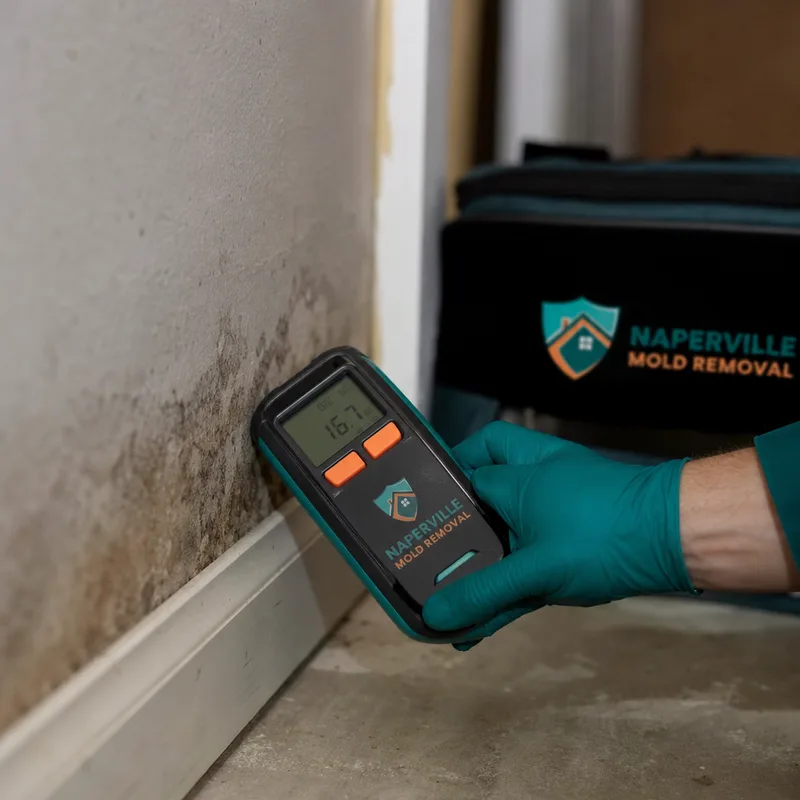
The contractor looks for staining, condensation patterns, and likely moisture pathways around windows, bathrooms, basements, and HVAC supply and return areas.
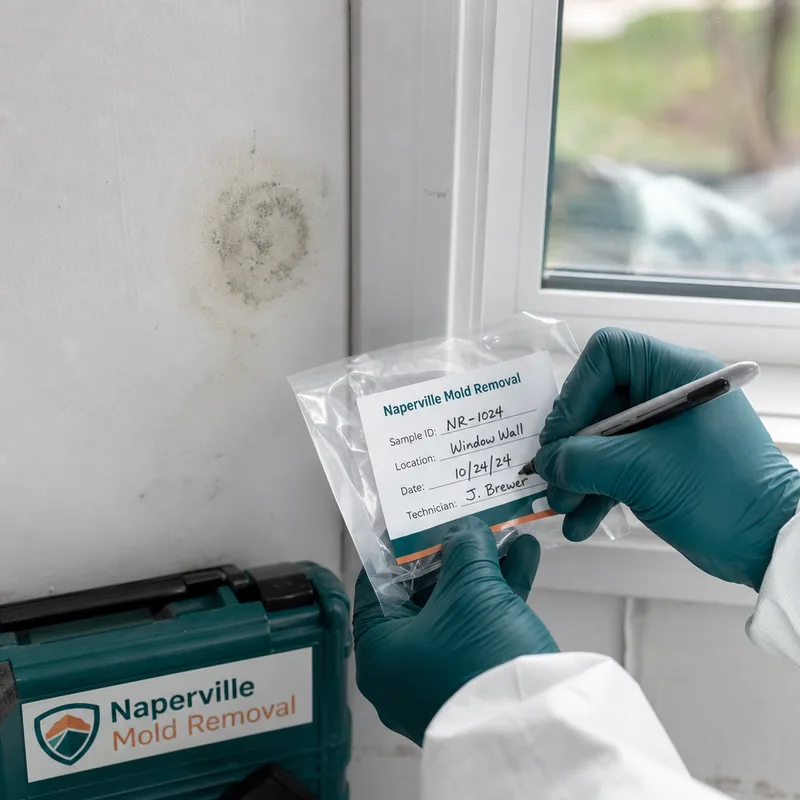
The contractor chooses sampling locations that match your concerns and the building layout, often adding a reference sample for comparison.
Samples are labeled by location and handled so results can be tied back to specific rooms or materials.
You get results with clear notes on what was sampled and what it suggests. If remediation is recommended, you can use the documentation to plan the scope.
If you suspect mold, the hardest part is often figuring out who to call first. Describe the situation once and we'll connect you with a local contractor who can handle mold testing and documented findings for your home.
CALL NOW: +1 331 281 1144Inside the testing process
Questions before you call
Testing is usually most helpful when you need documentation, when the source is unclear, or when you want to confirm whether a suspected area is contributing to indoor air concerns. If there is obvious active growth on wet materials, the priority is typically stopping the moisture and removing affected materials safely, and testing can be used to document conditions before or after that work.
Share the rooms involved, whether there was a specific water event such as a roof leak, plumbing leak, or seepage, whether the area is finished or unfinished, and whether you're noticing odor, staining, or symptoms. In Naperville, mention if the concern is in a finished basement or near windows that collect winter condensation, because that often changes where sampling is most informative.
Air sampling looks for airborne spores in a room at the time of sampling and is often compared to a reference sample, while surface sampling identifies what's on a specific material where discoloration is visible. A contractor may recommend one or both depending on whether the concern is hidden behind drywall or under flooring, or visible on a surface.
Testing can suggest a problem when results and moisture evidence point to a source, but it does not automatically pinpoint an exact hidden location. Contractors often combine observations, moisture checks, and targeted sampling to narrow down likely areas, then recommend focused exploratory openings if warranted.
HVAC can matter because it moves air between rooms, and returns can pull air from basements or lower levels where moisture issues start. If you've had a basement leak, a long-term humidity problem, or odor that appears when the system runs, tell the contractor so the sampling plan can consider supply and return locations and nearby building materials.
Leave suspected areas accessible, avoid heavy cleaning or spraying chemicals near the concern right before the visit, and note any recent painting or drywall work. If you have photos from when water damage first happened, that timeline helps a contractor choose sampling locations and interpret results.
The next step is usually scoping cleanup around the impacted materials and correcting the moisture source so the conditions don't return. The testing findings can help you compare what contractors propose for cleanup and source control.
One call starts the connection
Explain what you're seeing and where it's happening, and we'll connect you with a local contractor for mold testing in Naperville who can collect samples, document findings, and talk through next steps.