
Moisture mapping
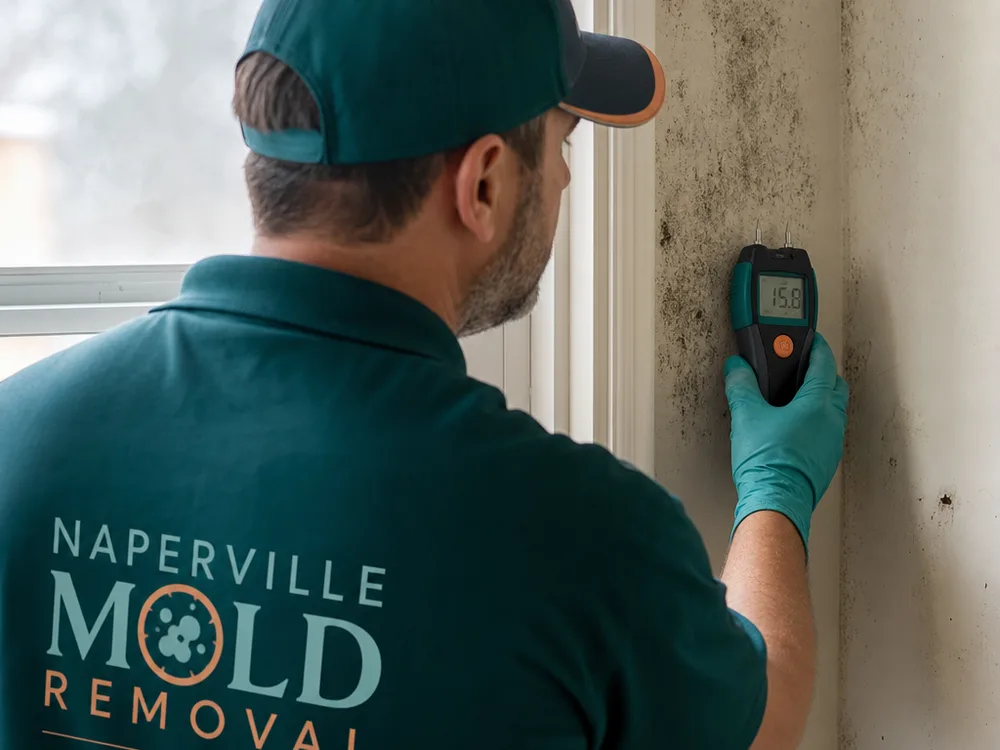
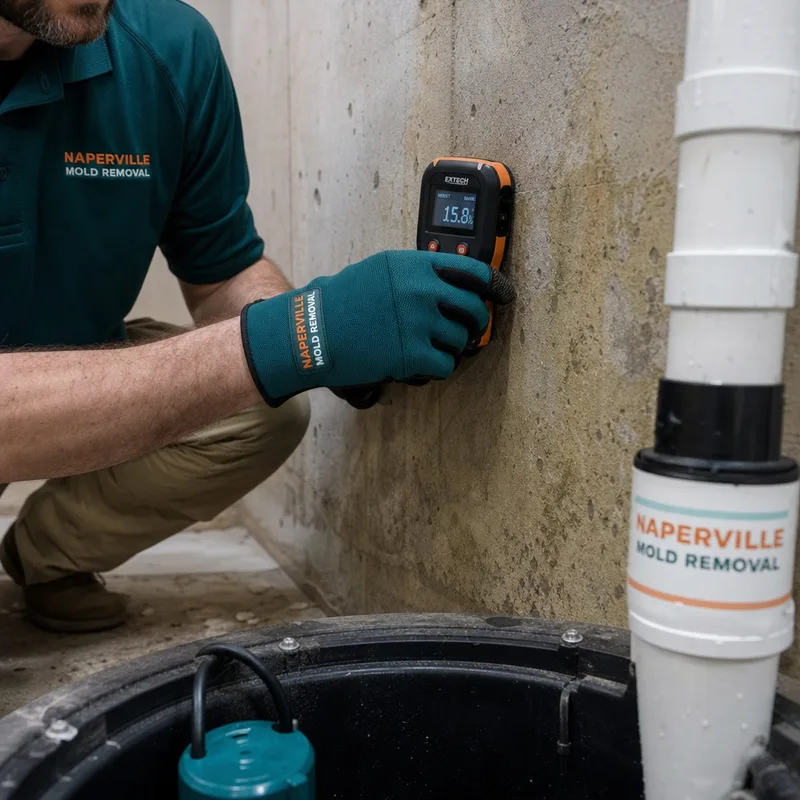
Moisture meters and visual checks help identify wet building materials and the boundaries of the affected area, including behind finishes where symptoms show up late.
Serving Naperville, Illinois & surrounding areas
Calls answered around the clock
Mold inspection · Naperville, Illinois
Describe what you're seeing once and get connected with a local contractor who can inspect, document findings, and explain next steps.
CALL NOW: +1 331 281 1144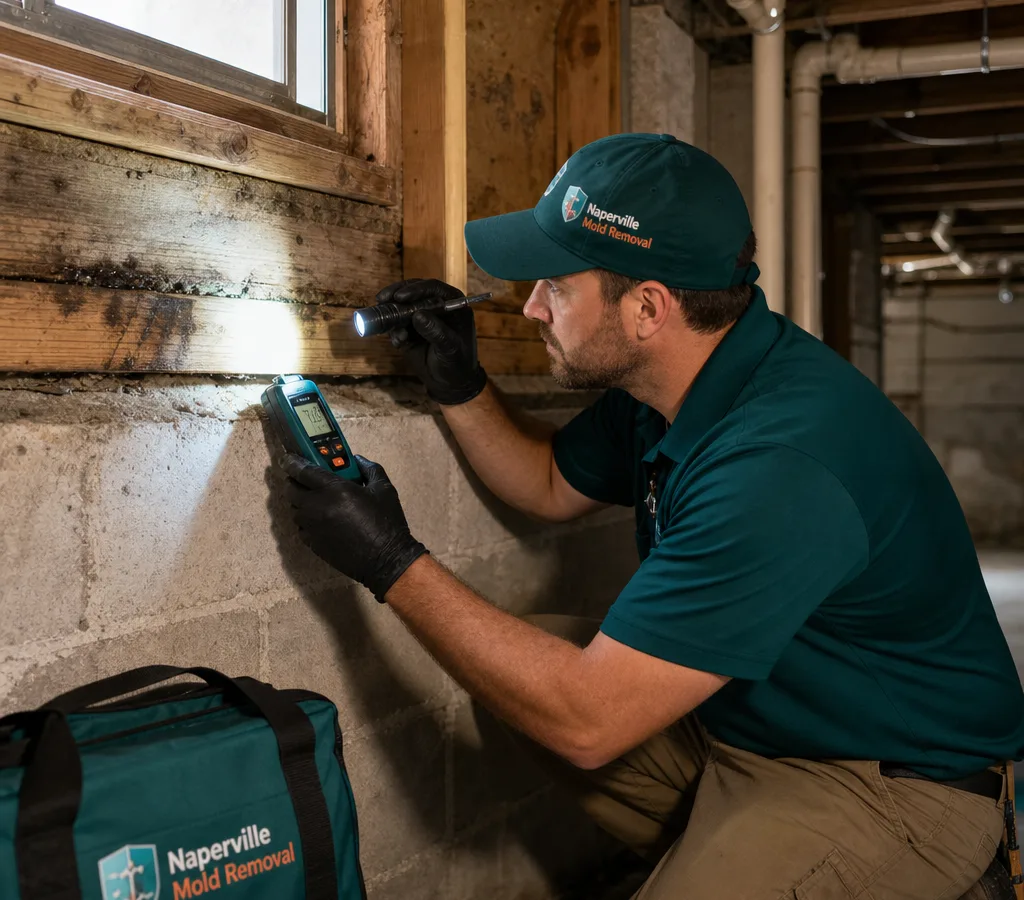
Know what is happening before cleanup
Searching for mold inspection Naperville Il usually starts with a smell, a stain, or a health concern. An inspection is the right first move when you need to confirm whether mold is present, where it's coming from, and what has to happen before any cleanup begins.
In Naperville, moisture issues often show up around basements, crawlspaces, and attached garages, especially after heavy rain cycles or when grading and downspouts push water toward the foundation. Condensation can also be a driver, like sweating ductwork, cold water lines, or bathroom exhaust that doesn't vent well.
A proper Naperville mold inspection focuses on two things at the same time:
If you already know you want cleanup, the inspection still matters because it helps define containment, what materials are affected, and what should be corrected so the issue doesn't return.
If you're trying to understand the full process after findings are documented, mold remediation is typically the next phase that a contractor may recommend once the inspection points to active growth and a moisture driver.
Inspection scope
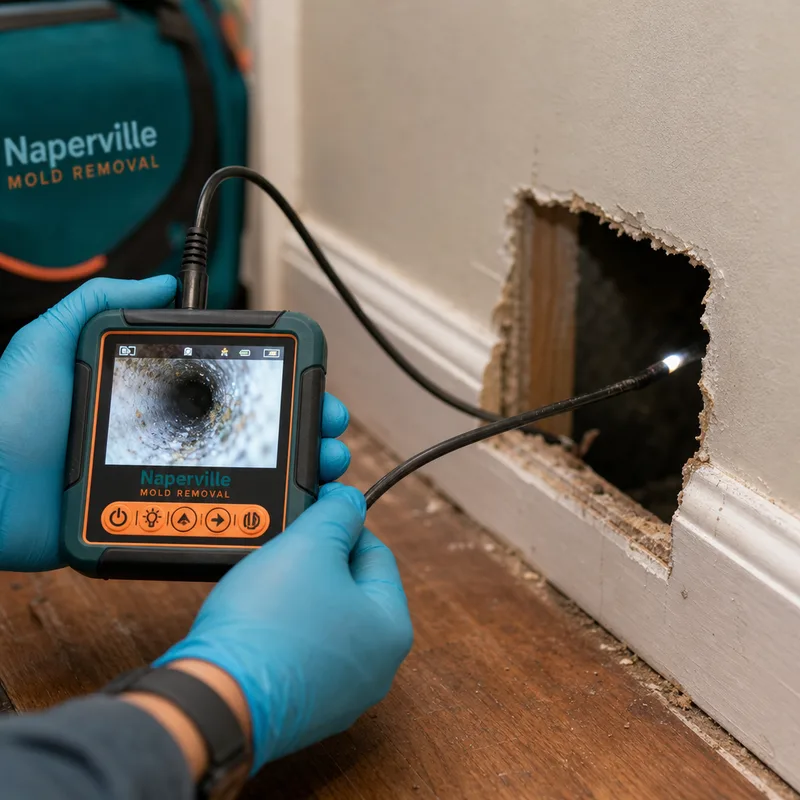
Moisture meters and visual checks help identify wet building materials and the boundaries of the affected area, including behind finishes where symptoms show up late.
Basement walls, rim joists, sump areas, window wells, and exterior penetrations are reviewed for signs of seepage, hydrostatic pressure, or recurring dampness.
Bathrooms, laundry rooms, HVAC closets, and duct runs are common places where condensation or high indoor humidity can feed growth even without a leak.
Staining on sheathing, compressed insulation, and bathroom fan discharge into attic space are common clues that moisture is accumulating overhead.
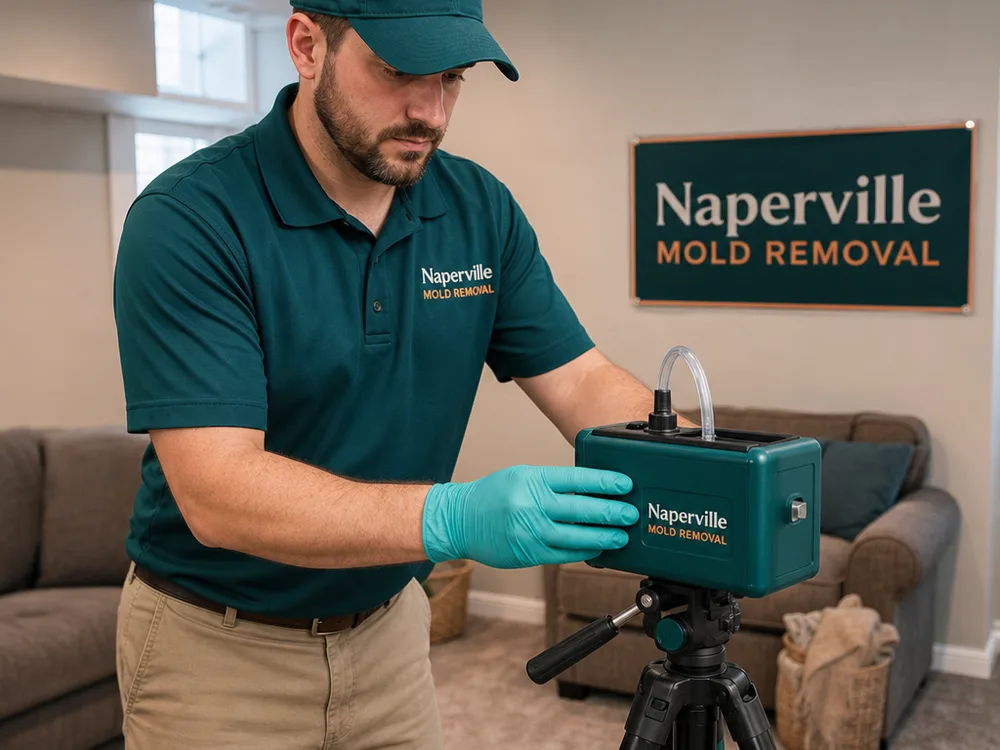
Surface, tape, swab, or air sampling may be used to support a plan, confirm suspect material, or document conditions for a property transaction when appropriate.
The referral process
Share where you see staining or growth, what it smells like, any recent leaks, and which areas are involved—basement, bathroom, attic, around windows, or near HVAC.
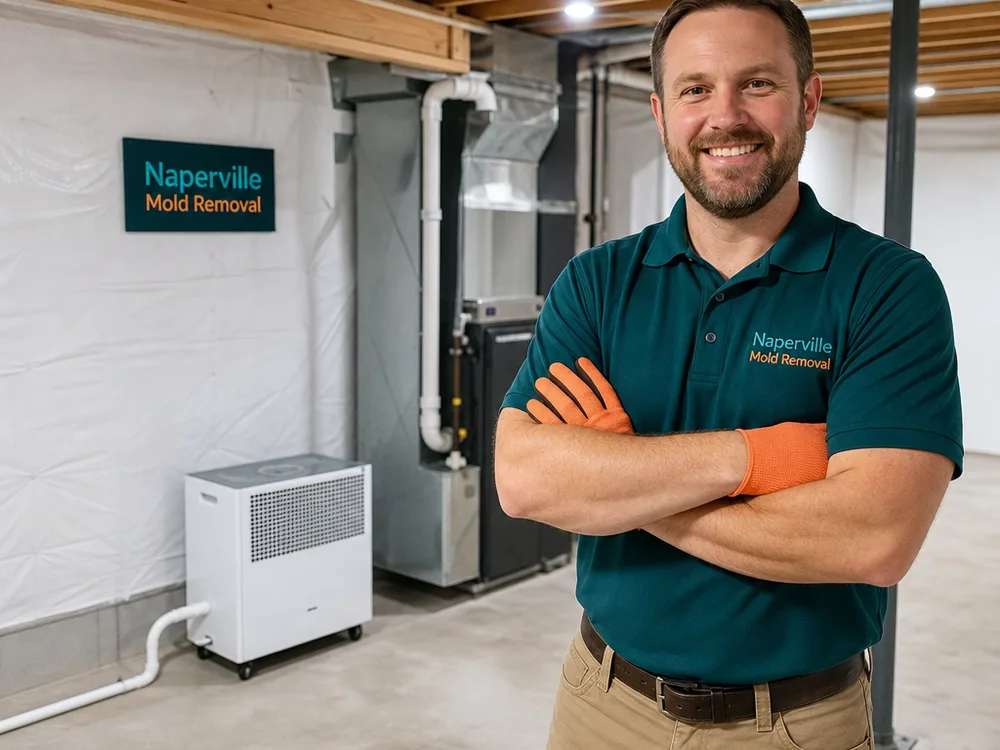
Naperville Mold Removal matches your call to an independent contractor who handles mold inspection work in Naperville and nearby communities.
You speak directly with the contractor about what they see, what they tested, and what materials and moisture sources appear involved.
If remediation, drying, or a repair is recommended, the contractor can explain the scope and sequencing so you can choose how to proceed.
If you're dealing with a musty odor, water staining, or suspected growth, a clear inspection can turn a vague worry into a defined plan. Describe the property and the affected area once and get connected with a local contractor who can take it from there.
CALL NOW: +1 331 281 1144Inside the inspection
Questions before you call
Have the location of the concern, when you first noticed it, and any recent water events ready to share. Helpful details include whether the area is a basement, crawlspace, bathroom, attic, or around windows; whether there's a musty odor; and if any materials have already been removed or cleaned.
Air testing is sometimes used, but it isn't automatically the right tool for every situation. A contractor may rely on a visual inspection and moisture mapping first, then use air or surface sampling when documentation is needed, when hidden growth is suspected, or when results will guide containment and cleanup decisions.
Basements, bathrooms, attics, and areas around plumbing and HVAC are common because they combine moisture with limited airflow. In Naperville homes, contractors often pay close attention to rim joists, window wells, sump areas, and any room that has had a past leak or recurring condensation.
Cleaning can remove visible evidence and make it harder to identify what's going on. If you need to do something immediately, avoid disturbing suspect material and focus on reducing moisture—for example, controlling humidity and stopping any active water source—until the contractor can assess the area.
The inspection should point you toward the moisture driver that needs correction, such as a plumbing leak, poor bathroom exhaust, or condensation on cold surfaces. The contractor can explain what to fix first so any remediation work has a better chance of holding up over time.
Most inspections are done with you home so you can show problem areas and talk through history, like past leaks or flooding. If the contractor plans any sampling or needs access to crawlspaces or attics, they may ask for clear pathways and pets secured during that part of the visit.
If there is active growth on building materials, remediation is commonly recommended, but the scope depends on what's affected and why it happened. The contractor can walk you through options, including what materials may need to be removed, how containment is handled, and what moisture correction should happen first.
One call starts the connection
Explain what you're seeing and where it's happening, and we'll connect you with a local contractor who handles mold inspection in Naperville and can outline the next step based on what they find.